
HydroTherm Panel
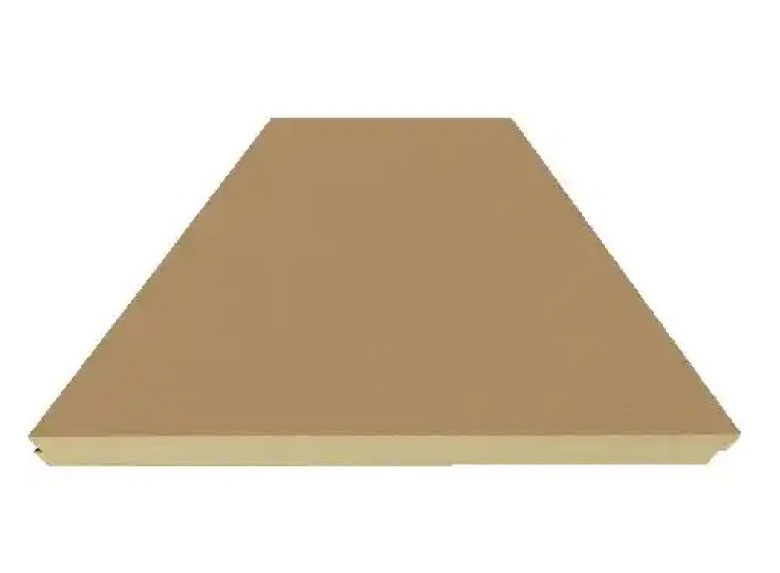
PIR Thermal Insulation Board consists of PIR Foam core, faced on both sides with 200micron kraft paper. The standard width of PIR Foam Insulation Board is 1200mm or 600mm. The length can be customized.
Product Details
Panel HydroTherm
Aislamiento PIR
Corte del Panel
Papel Kraft
The PIR Rigid Insulation Board with a kraft paper surface are a type of advanced insulation material that combines the superior thermal properties of polyisocyanurate foam with the durability and versatility of kraft paper.
Highly Efficient Solution
These PIR Insulation Boards offer a robust, versatile, and highly efficient solution for a wide range of insulation needs.
1. Wall Insulation Systems
- External Thermal Insulation Composite Systems (ETICS): PIR Polyisocyanurate Insulation Boards serve as the primary insulation layer installed on the exterior walls of buildings, providing thermal insulation and reducing heat transfer through the walls.
- Internal Wall Insulation Systems: Used for insulating the internal walls of buildings, particularly suitable for retrofitting old buildings for energy efficiency without affecting the exterior appearance.
2. Roof Insulation
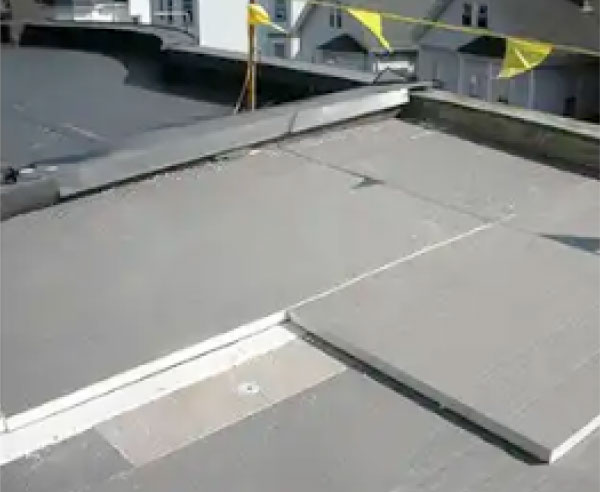
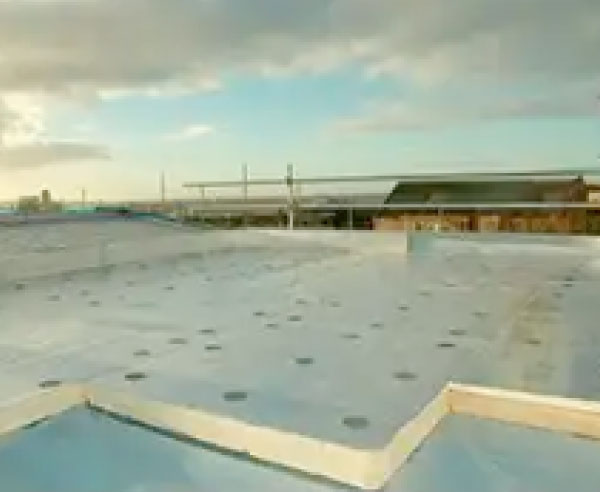
- Flat Roof Insulation: PIR Insulation Boards can be directly laid on flat roofs, creating a continuous insulation layer to prevent heat loss through the roof.
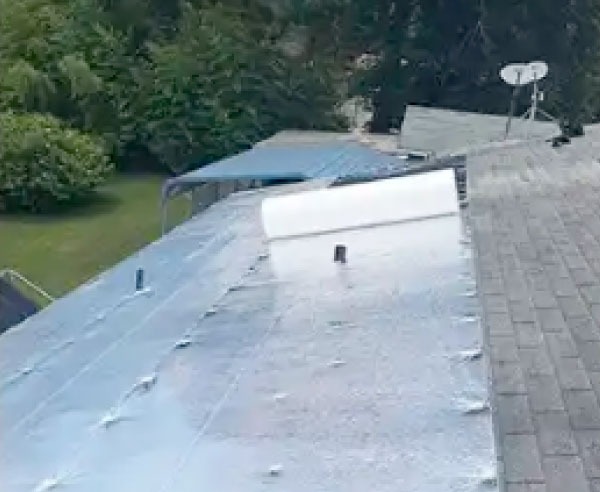
- Pitched Roof Insulation: Suitable for various forms of pitched roofs, easy to install, and enhances overall insulation performance.
3. Floor Insulation
- Underfloor Heating Systems: In underfloor heating systems, PIR Rigid Insulation Board effectively reduce downward heat loss, improving the energy efficiency of the heating system.
- General Floor Insulation: Used in regular floor structures to enhance insulation performance and improve indoor comfort.
4. Curtain Wall Insulation
- Glass Curtain Wall Insulation: PIR Foam Insulation Boards can be used as insulation material in glass curtain wall systems, improving the thermal insulation performance of the curtain wall and reducing energy loss.
Why Choose our HydroTherm Panel?
01 / Superior Thermal Performance
PIR Insulation Board delivers exceptionally low thermal conductivity, providing outstanding energy efficiency. At a density of 35–40 kg/m³, PIR achieves a thermal conductivity of 0.018–0.024 W/(m·K)—roughly half that of EPS. Among commonly used insulation materials, PIR offers one of the lowest thermal conductivity values, helping buildings maintain stable indoor temperatures with less energy use.
02 / Excellent Moisture and Water Resistance
With a closed‑cell content above 90%, PIR is naturally hydrophobic. It resists moisture absorption, maintains its thermal performance even in humid environments, and prevents water intrusion through building assemblies. This makes it ideal for roofing systems, wall assemblies, and cold‑storage applications.
03 / Fire Resistance and High‑Temperature Stability
When formulated with flame retardants, PIR becomes a self‑extinguishing material that is difficult to ignite. Its softening point exceeds 250°C, and it only decomposes at extremely high temperatures. During exposure to flame, PIR forms a protective carbonized layer that helps shield the underlying foam and slows flame spread. It also avoids releasing harmful gases at elevated temperatures.
04 / Durable, Stable Cell Structure
PIR’s predominantly closed‑cell structure provides long‑term thermal stability, excellent freeze‑thaw resistance, and sound‑absorbing benefits. Under normal conditions, PIR insulation systems can perform reliably for 30+ years. They resist degradation from moisture, drying, electrochemical corrosion, insects, mold, algae, and rodents.
05 / High Dimensional Stability
PIR Boards offer strong resistance to deformation. They do not crack easily and maintain a stable, secure finish over time, even under temperature fluctuations or mechanical stress.
06 / Space‑Saving Efficiency
Because HydroTherm Panel is made with PIR delivers superior R‑value per inch, building envelope thickness can be reduced while still meeting energy‑code requirements. This increases usable interior space and supports more efficient building design.
07 / Environmentally Responsible
HydroTherm Panel is produced using fluorine‑free foaming technology and contain no substances prohibited or restricted by U.S. regulations. They support energy‑efficient construction and contribute to reduced heating and cooling loads.
08 / High Cost‑Effectiveness
Although PIR may have a higher upfront cost than traditional insulation materials, its superior thermal performance significantly reduces long‑term energy expenses. The result is a highly cost‑effective solution over the life of the building.
Quick Specifications
- BOARD TYPE PIR Rigid Insulation
- FACING 200micron kraft paper
- WIDTH 1200mm / 600mm
- THICKNESS 0.39” up to 3.94”
- FIRE RATING Class 0
Lengths can be customized based on project requirements.
Frequently Asked Questions
What is an Insulated Metal Panel / Board?
An insulated panel is a high-performance system composed of rigid facings bonded to an insulating core. The insulating core can be made from various materials, with the most common options being PUR (polyurethane), PIR (polyisocyanurate) and rock wool, each of which offers different benefits in terms of thermal performance, fire resistance and acoustic properties.
What is the difference between PIR, PUR, and Rock Wool insulation?
PUR and PIR Insulation: Panels with rigid foam core offer very low thermal conductivity. They are lightweight but structurally strong. The main difference lies in their reaction to fire. PIR insulation has a higher degree of aromaticity, giving it greater thermal stability and better fire resistance compared to standard PUR.
Rock Wool Insulation: Composed of mineral fibers derived from volcanic rock. It provides moderate thermal insulation, excellent acoustic performance, and superior fire resistance as it is inherently non-combustible.
When should a polyurethane sandwich panel be used instead of a rock wool panel?
Polyurethane Panels (PUR/PIR): Offer significantly lower thermal conductivity than rock wool, achieving higher insulation values with less thickness. They are the most used solution where high thermal efficiency is crucial. They are also much lighter, simplifying transport and installation.
Rock Wool Panels: Selected for applications where fire compartmentation and acoustic performance are key requirements.
Summary: Choose PUR/PIR panels when the priority is maximum thermal efficiency, reduced thickness, and quick installation.
Technical Data Sheet
| Property | Standard | Specification |
|---|---|---|
| Standard Width | - | 23.6 in / 47.2 in |
| Thickness | - | 0.39” up to 3.94” |
| Foam Density | ASTM D1622/D1622M-14 | 1.9–3.1 lb/ft³ |
| CFCs and HCFCs | Headspace GC/MS | Free |
| Thermal Conductivity | ASTM C518-17 | <=0.024W/m.K |
| Fire Rating | BS 476 Part 6&7 | Class 0 |
| Compressive Strength | ASTM D1621-16 | >=0.15Mpa |
| Tensile Bond Strength | DB34/T 3826-2021 | >=0.15Mpa |
| Water Absorption by Volume | ASTM C209-15 | <3% |
| Dimensional Stability | - | 158°F (48 h): ≤ 1.5% | -22°F (48 h): ≤ 1.0% |
| Service Temperature | DB34/T 3826-2021 | –22°F to 248°F / -30ºC – 120ºC |
Projects & Applications
swipe_left Swipe to see more swipe_right
Quote your Insulation Project
Contact our engineering team to calculate the exact thicknesses and needs for your project.